

.jpg "饮料仓储电动叉车,货架布局与叉车通道关系(图1)")
Beverage warehouses require efficient storage and fast material handling due to high product turnover and heavy pallet loads. The relationship between rack layout and forklift aisle width directly influences space utilization, operational safety, and productivity. This article explains key considerations for selecting electric forklifts and designing rack systems in beverage storage facilities.
Rack layout determines the minimum aisle width needed for forklift operation. Common configurations include standard pallet racking, narrow aisle racking, and drive-in racking. Standard pallet racking typically requires aisles 3.5 to 4 meters wide to accommodate counterbalance electric forklifts. Narrow aisle racking reduces aisle width to 2.5 to 3 meters, allowing reach trucks or straddle forklifts to work efficiently. For very high-density storage, very narrow aisle layouts with aisles below 2 meters demand specialized turret trucks or order pickers.
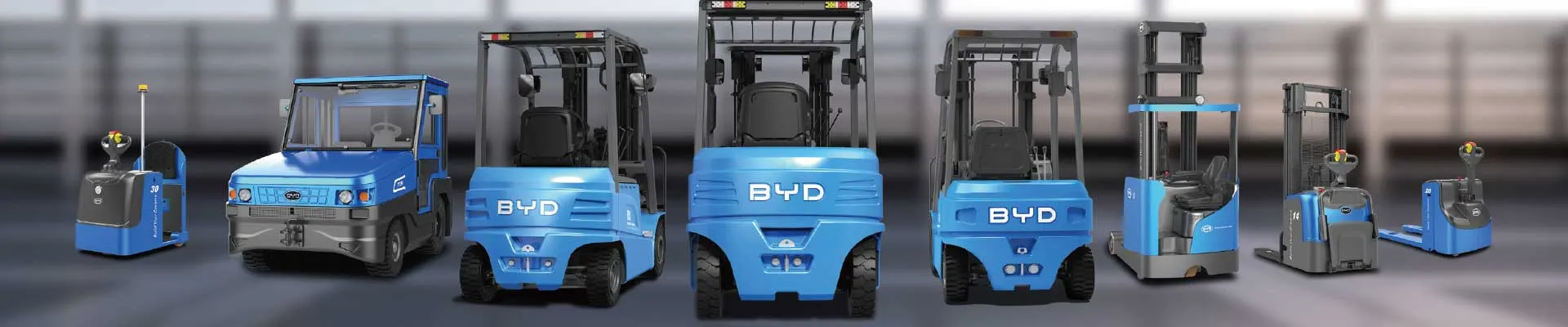
Electric forklifts offer different turning radii and lift heights, which directly affect aisle requirements. A standard electric counterbalance forklift needs a wider turning circle, making it suitable for wider aisles but less space-efficient. In contrast, a reach truck has a narrower wheelbase and can operate in aisles as tight as 2.5 meters, ideal for medium-density beverage storage. For maximum space utilization, a three-way stacker or side-loader electric forklift can work in aisles under 1.8 meters, but these machines require precise guidance systems and higher initial investment.
When planning a beverage warehouse, consider the balance between storage density and operational speed. Wider aisles allow faster travel and easier maneuvering, but reduce storage capacity. Narrower aisles increase pallet positions but may slow down picking and put-away, especially during peak seasons. The optimal solution often involves a combination of rack types and forklift models. For example, use narrow aisles for slow-moving products and wider aisles for fast-moving lines.
Safety is another critical factor. Adequate clearance between rack uprights and forklift sides must be maintained to prevent collisions. Industry standards recommend at least 15-20 centimeters on each side. Additionally, floor quality, lighting, and aisle markings should support safe operation. Electric forklifts produce zero emissions, making them suitable for indoor beverage warehouses, and their quiet operation improves working conditions.
Hubei Jianshu New Energy, based in Hubei, specializes in the sales and after-sales service of electric forklifts for beverage warehouses. We help clients choose the right equipment based on their rack layout and aisle dimensions. Our team provides professional advice on forklift specifications, battery life, and maintenance to ensure long-term efficiency. Whether you need a standard forklift for wide aisles or a narrow-aisle model for high-density storage, we offer tailored solutions.
In summary, the relationship between rack layout and forklift aisle width is fundamental to beverage warehouse design. By matching electric forklift features with storage requirements, you can achieve both high space utilization and smooth material flow. For further guidance, contact Hubei Jianshu New Energy for reliable electric forklift sales and service in Hubei region.


