

In the fast-paced environment of a food processing plant, forklift selection directly impacts operational efficiency, safety, and hygiene compliance. As an electric forklift expert, I recommend a systematic approach that begins with understanding your production line cycle time.
Cycle time refers to the interval between successive product outputs on your line. For example, if your packaging station finishes a pallet every 8 minutes, your forklift must complete a full transport cycle—pickup, travel, drop-off, and return—within that same window. Otherwise, bottlenecks occur, reducing throughput.
Start by measuring your actual peak demand. Count the number of pallet movements per hour during the busiest shift. Then, calculate the required forklift cycle time: 60 minutes ÷ (movements per hour). For instance, 30 movements per hour means a maximum cycle time of 2 minutes per movement.
Next, evaluate your facility layout. Food processing plants often have tight aisles, cold storage zones, and washdown areas. Electric forklifts are ideal because they produce zero emissions, reduce noise, and are easier to sanitize than internal combustion models. But not all electric forklifts are equal. Choose a model with a clean, sealed battery compartment—preferably lithium-ion—to avoid contamination from acid leaks or maintenance residues.
Lithium-ion batteries also support opportunity charging during breaks, which aligns with discontinuous production lines. If your line runs 24/7, consider a forklift with fast-charging capability and a battery management system that prevents overheating.
Tire selection matters too. Non-marking, solid rubber tires are standard for food areas to avoid floor damage and residue. For wet or slippery floors, opt for traction control features.
Finally, match the forklift capacity to your maximum pallet weight plus a 10% safety margin. Avoid oversizing, which wastes energy and increases floor loading.
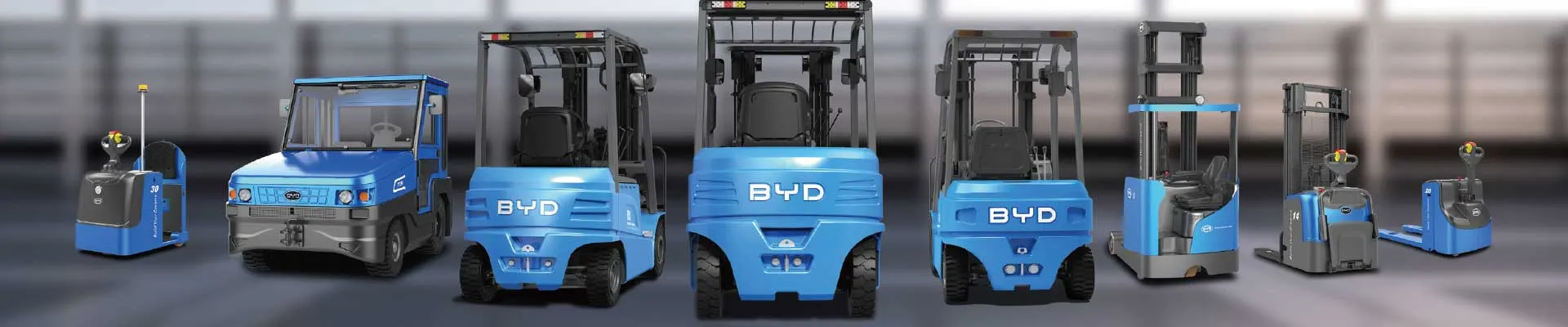
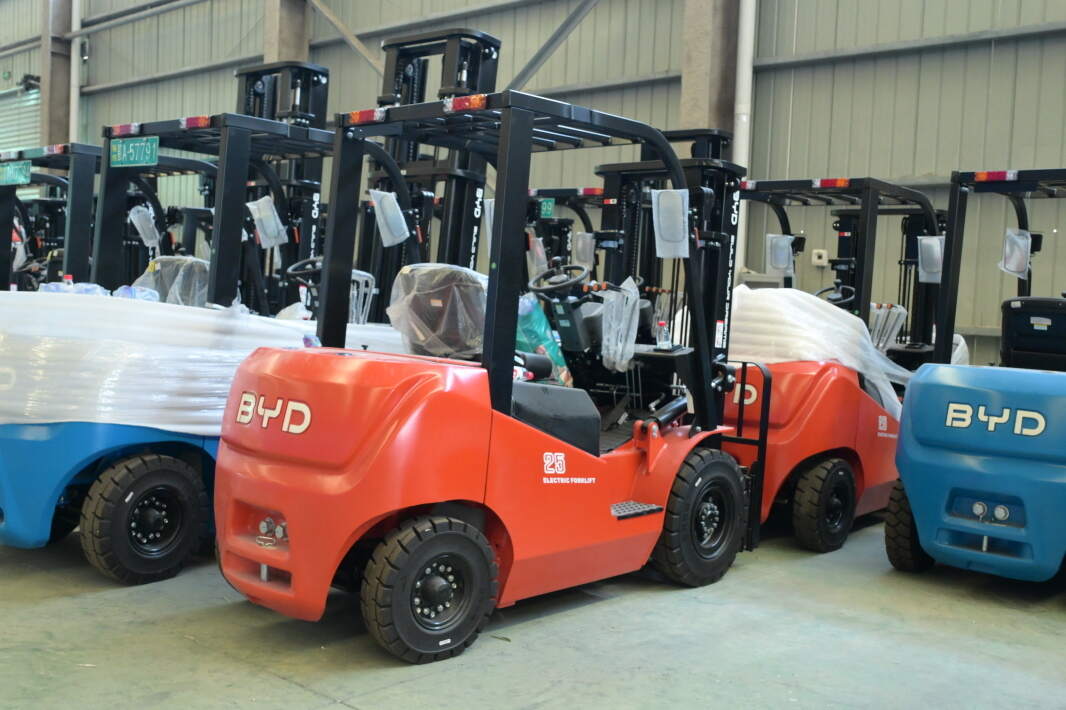
At Hubei Jianshu New Energy, we specialize in providing BYD electric forklifts to food processing plants across Hubei Province. Our team conducts on-site cycle time audits and recommends the optimal model, battery configuration, and charging infrastructure. We also offer comprehensive after-sales service, including maintenance, repair, and genuine parts support.
Remember: the right forklift is not the cheapest one, but the one that matches your production rhythm. A properly selected electric forklift will reduce downtime, lower energy costs, and improve hygiene standards. Contact us for a free cycle time analysis and forklift proposal tailored to your food processing line.


