

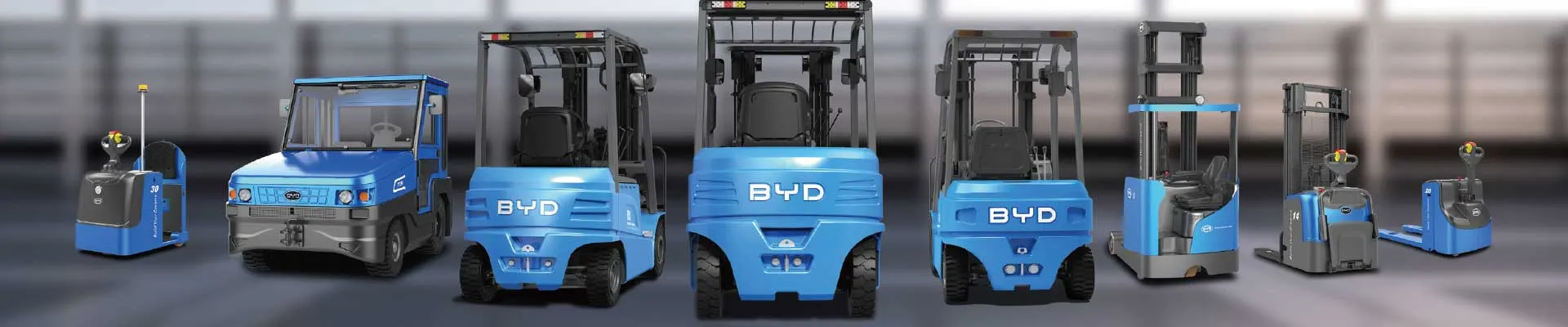
Operating an electric forklift in a food storage warehouse in Hubei requires careful cost management. Unlike traditional internal combustion models, electric forklifts offer lower daily expenses but demand a structured approach to maintenance.
Battery and Charging Costs
The battery system is the largest single cost factor. Lithium-ion batteries, though higher in initial investment, provide up to 2,000 full cycles with minimal degradation. In contrast, lead-acid batteries need watering, equalization, and replacement every 1,000 cycles. For a Hubei warehouse running two shifts, lithium-ion batteries can reduce annual energy costs by 30% due to faster charging and no need for spare batteries. Regular charging during breaks ensures continuous operation without extra battery inventory.
Planned Preventive Maintenance
Food storage environments create unique challenges: humidity, temperature fluctuations, and frequent cleaning. Electric forklifts have fewer moving parts than diesel models, meaning lower hydraulic and engine maintenance. However, brake pads, tires, and contactors require quarterly inspection. A typical annual maintenance plan—covering fluid checks, filter replacements, and controller diagnostics—costs about 15% less than comparable ICE forklifts. Skipping preventive checks leads to motor burnout or controller failure, which can triple repair costs.
Operator Training and Energy Efficiency
Operator behavior directly impacts power consumption. Smooth acceleration, regenerative braking, and avoiding full-throttle lifts can extend battery runtime by 20%. In Hubei’s food warehouses, where cold storage zones demand constant on/off cycles, such habits save significant electricity. Training programs that emphasize these techniques lower the kWh consumed per pallet moved.
Total Cost of Ownership (TCO) Comparison
Over a five-year period, an electric forklift in a Hubei food warehouse typically shows a 10–12% lower TCO than a diesel or LPG counterpart. The main savings come from fuel (electricity is cheaper than propane or diesel in Hubei), reduced maintenance downtime, and fewer parts replacements. The initial higher purchase price is offset within 18–24 months when usage exceeds 1,500 hours per year.
Local Support from Hubei Jianshu New Energy
As a dedicated service provider, Hubei Jianshu New Energy offers comprehensive after-sales support for electric forklifts in the Hubei region. Our team performs routine inspections, battery health checks, and emergency repairs, helping food storage clients maintain predictable operating costs. We recommend scheduling a site assessment to optimize charging infrastructure and match battery capacity to workload patterns. By focusing on proactive maintenance, warehouses can achieve 98% uptime while controlling annual expenses.
In conclusion, electric forklifts are a cost-effective choice for Hubei food storage facilities when managed with proper battery care, regular service, and trained operators. The long-term savings justify the upfront investment, especially with local expert support.


